


Meet nine sculptors who work in a wide range of three-dimensional media
BRENT COOKE
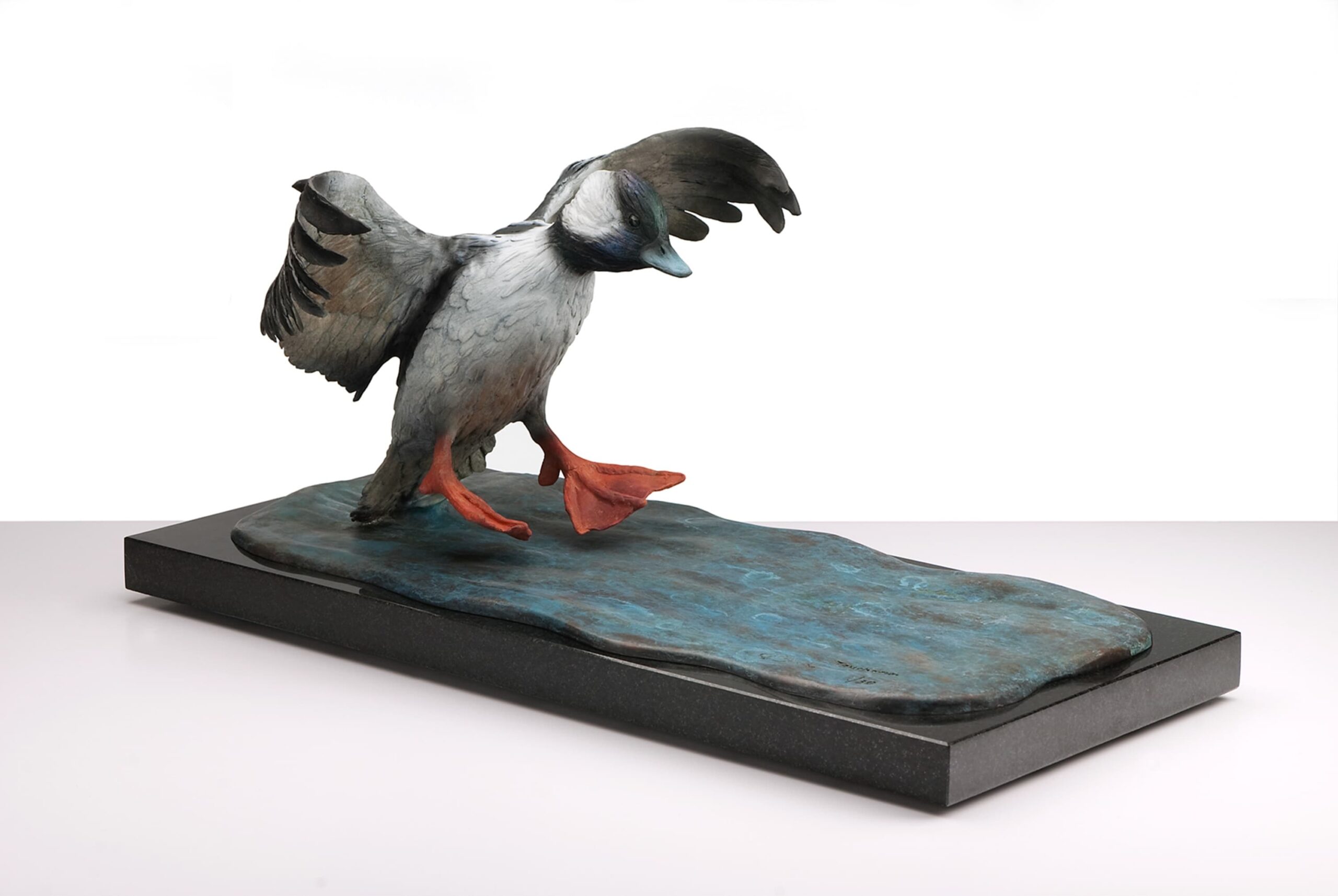
Brent Cooke, Touchdown, bronze, 22 x 16 x 11.
Where do you live and work? I live and work in Victoria, BC, Canada.
What are your favorite subjects to depict? My favorite subjects are birds of prey—eagles, hawks, and owls. I find they have real character and are interesting in their behavior.
How would you describe your style? I like to blend abstraction with realism. I find I can create movement in my work with abstract shapes yet hold the viewer’s attention with detailed, life-size subjects.
What is your creative process like? I spend a lot of time outdoors as a photographer, so I get to see many animal interactions. It is these moments that I try to capture in bronze.
Where did you study art? I am self-taught. I always remember a saying I heard as a kid: ”If you love something, you will teach yourself. If you don’t love it, others will have to teach you.”
What have been some of the highlights of your art career? In 2015, the Canadian Wildlife Federation gave me the Robert Bateman Award as Conservation Artist of the Year. I have won many first-place awards and a Medal of Excellence for my work. And I won first place in a sculpture competition in China in a field of over 2,000 entries.
When you’re not creating art, what else do you enjoy doing? When I am not working in the studio, I love to go out with my camera and look for reference material. Photography is a lifelong passion of mine that started when I was just out of school.
If you weren’t an artist, what would you be? I also work as the director of a motorcycle museum in Vancouver. I have worked in the museum field since 1973.
Where can collectors find your work? Reinert Fine Art, Charleston, SC; Lovetts Gallery, Tulsa, OK; Valley Bronze Gallery, Joseph, OR; Peninsula Gallery, Sidney, BC, Canada; www.castartstudio.com.
JESS DAVILA
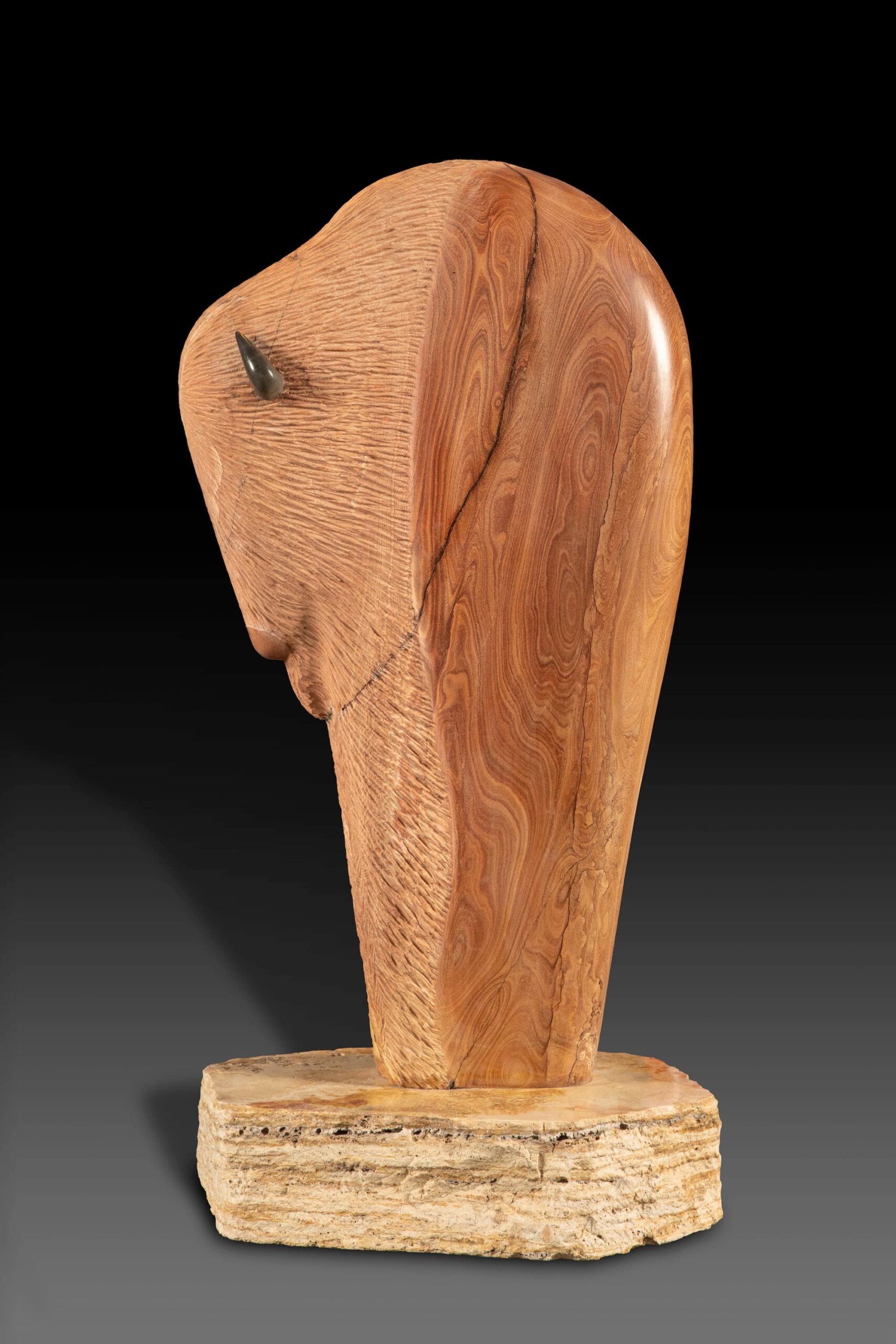
Jess Davila, Prairie Spirit, sandstone/travertine, 33 x 16 x 15.
Where do you live and work? I live and work in Tucson, AZ, but I spend quite a bit of time in the beautiful small town of Huachinera, Sonora, Mexico, located in the Sierra Madre region.
What are your favorite subjects to depict? I enjoy creating wildlife, such as buffalo, bears, and eagles, as well as human figures and abstracts, in various stones such as marble, onyx, limestone, sandstone, and alabaster from different parts of the world.
How would you describe your style? I have a contemporary style, giving viewers the idea of what I’ve created and letting them fill in the details.
What is your creative process like? I study my subject and find the stone that is best suited for it in color and matrix design. Then I start removing stone to give me the shape that I want. Finally I start sanding and polishing, which can take just as long or longer.
Where did you study art? I studied on my own, learning the techniques and ways of other artists I admired by visiting studios, museums, and galleries.
What have been some of the highlights of your art career? My family, my children, my masterpieces! I also created an art center in Huachinera called Centro Artistico y Cultural de Huachinera.
When you’re not creating art, what else do you enjoy doing? I enjoy traveling to visit our children and to see beautiful sights. I also enjoy taking care of my fruit trees and vegetable garden.
If you weren’t an artist, what would you be? I can’t think of anything else I would rather be doing. I enjoy creating that one-of-a-kind sculpture that will be loved and admired for years.
Where can collectors find your work? Wilde Meyer Gallery, Scottsdale and Tucson, AZ; Bella Fine Goods, Jackson, WY, and Telluride, CO; John Hanes Gallery, Boonville, CA; RiverStone Gallery, Ennis, MT; www.jessdavila.com.
ANGELA MIA DE LA VEGA
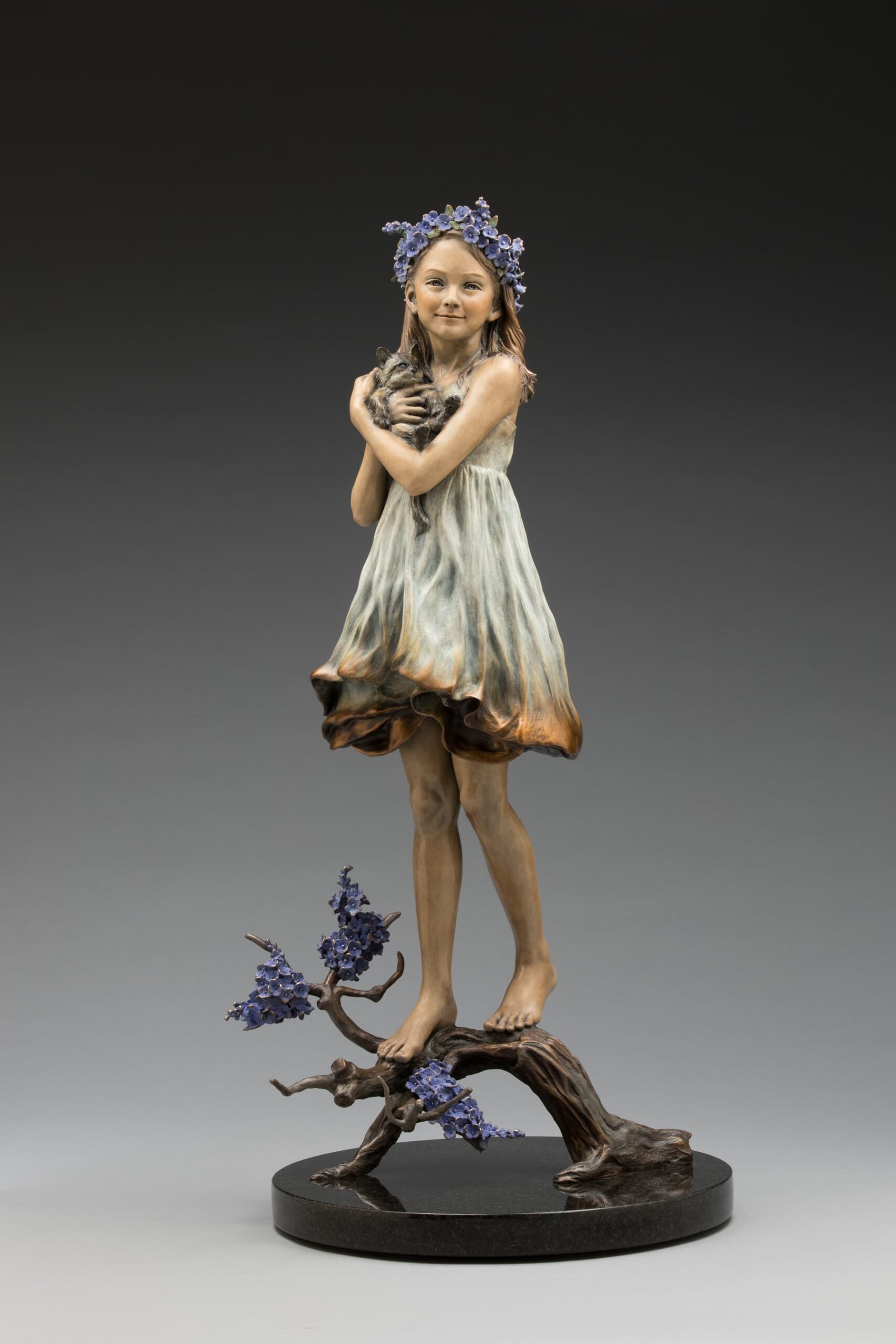
Angela Mia De la Vega, Harmony, bronze, 32 x 12 x 14.
Where do you live and work? I live and work in Dallas, TX.
What are your favorite subjects to depict? I adore sculpting children and only wish that I could sculpt faster, in order to capture the multitude of fleeting moments with children that fill my heart. How would you describe your style? My work is figurative realism, and the patina I use was developed specifically to portray the warmth, softness, and tenderness of children’s skin.
What is your creative process like? The first and most important step in my creative process is to truly fall in love with every one of my subjects. I need to know and appreciate them so that I can depict their unique beauty.
Where did you study art? I studied art at Clarion University, which is in the small town of Clarion in western Pennsylvania where I grew up. A dynamic young sculpture professor took me under her wing and encouraged me. I later studied at the University of Madrid in Spain, where the fine-art school enforced a classical art curriculum. This formal approach, with a strong focus on human anatomy, proved to be a solid foundation for my work.
What have been some of the highlights of your art career? About eight years ago I was going through a very difficult time in my personal life, and a wonderful group of friends and family came to my rescue. I think of them as my “butterflies”—without them, I would not have been able to extricate myself from the situation. In honor of them, and of the power of friendship, I created a sculpture of a little girl being lifted up by a swirl of butterflies.
When you’re not creating art, what else do you enjoy doing? I love traveling with my family, visiting museums together, eating seafood, and playing paddleball barefoot on a soft, sandy beach.
Where can collectors find your work? www.delavegastudios.com.
MARGARET M. DRAKE
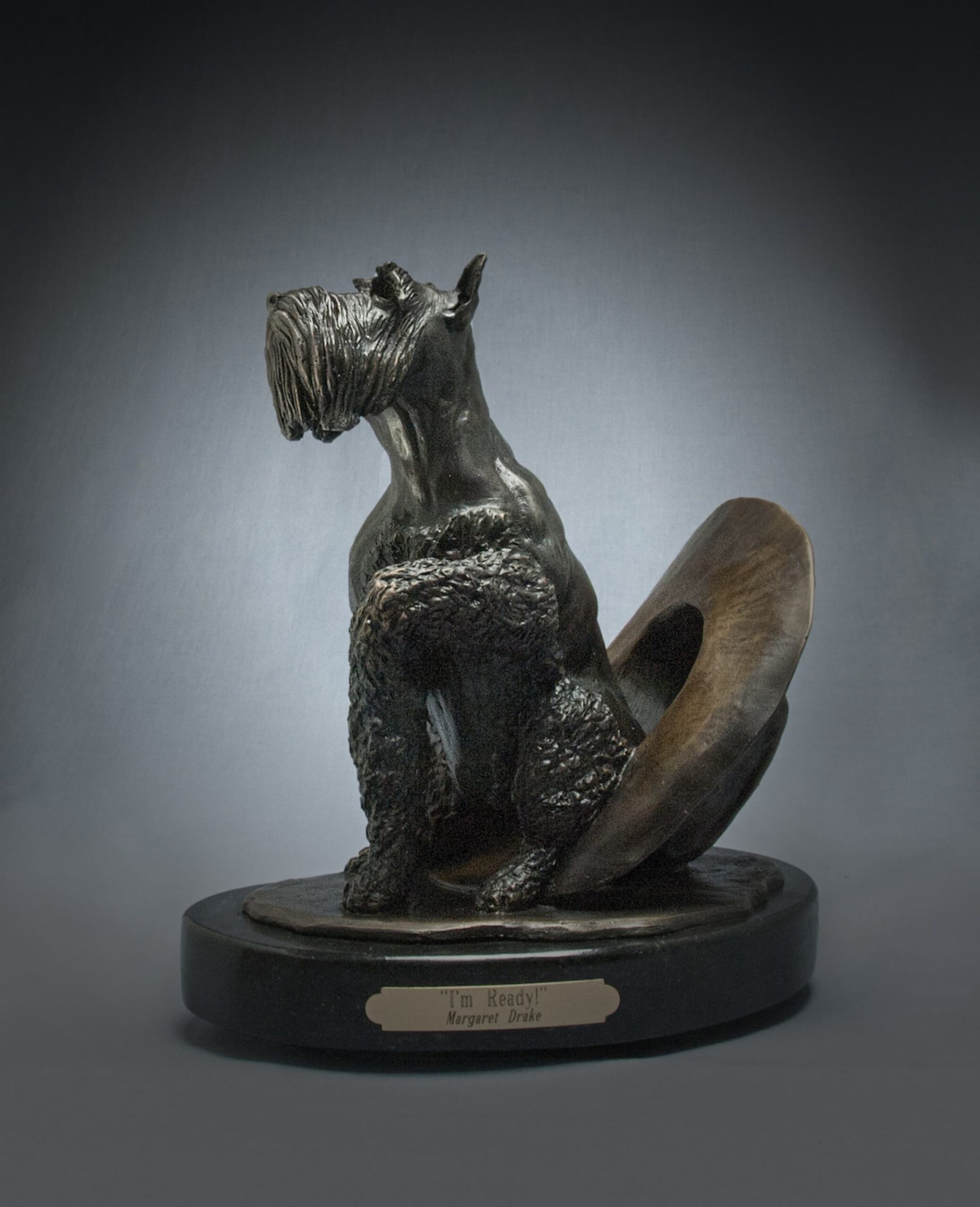
Margaret M. Drake, I’m Ready, bronze, 11 x 9 x 8.
Where do you live and work? I live and work on a ranch just outside of Glen Rose, TX.
What are your favorite subjects to depict? I love to sculpt horses, but I also enjoy other animals, as well as anything depicting beautiful action and motion.
How would you describe your style? I describe myself as a realistic figurative sculptor.
What is your creative process like? Once I get a concept in mind, I may create a small clay maquette, or I may just start creating the actual sculpture. I know some sculptors sketch out their preliminary plans, but I do best just seeing the three-dimensional piece so that I can then manipulate it to suit my vision of the final image.
Where did you study art? I only started sculpting in 2009 after retiring from a totally consuming, 30-year career. I started by taking lessons from a local sculptor, Art Blevins, who taught me the principles of proportion and perspective. I took a few workshops at Scottsdale Artists’ School and then branched out on my own after that.
What have been some of the highlights of your art career? I had a piece accepted for the permanent collection of the Museum of Western Art in Kerrville, TX, and another chosen by the city of Houston for permanent display at George Bush Intercontinental Airport.
When you’re not creating art, what else do you enjoy doing? I enjoy pastel and watercolor painting, reading, and playing golf.
If you weren’t an artist, what would you be? I think I would be a potter. I am blessed to have my own pottery studio complete with kilns, and occasionally I add ceramic elements to my sculptures.
Where can collectors find your work? Lost Creek Gallery, Calvert, TX; The Nest, Granbury, TX; Charles Morin Fine Art, Fredericksburg,TX; Adobe Western Art Gallery, Fort Worth, TX; Lantern Dancer Gallery, Pagosa Springs, CO; www.margaretdrakestudio.com.
ALLEN & PATTY ECKMAN
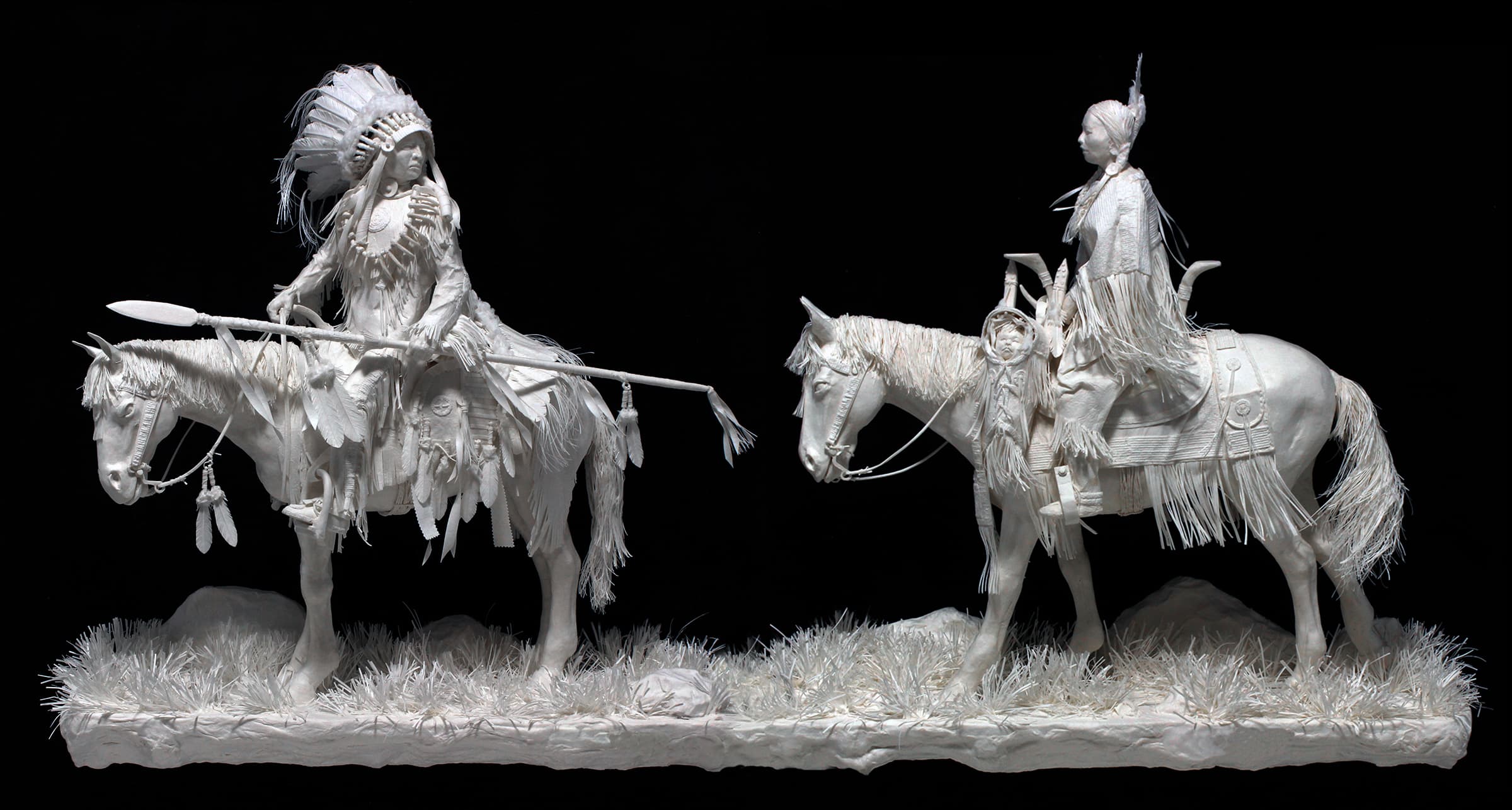
Allen & Patty Eckman, Pride of the Prairie, cast paper, 24 x 50 x 8.
Where do you live and work? For the past 30 years we have lived in the beautiful Black Hills of South Dakota near Rapid City. We work side by side in our home studio on 3 acres of ponderosa pine forest.
How would you describe your style? Our style is highly detailed and as realistic as we can accomplish. We love to show action and movement.
What is your creative process like? We start by formulating raw paper pulp. Then we press that pulp into blankets of paper for casting into our molds, and we also make sheet paper. From the starter cast, we pose the figure to create an articulated armature. We then finish sculpting the figure with soft paper for chasing and detail it with hard paper. For the bronzes we do, we create a paper sculpture that is sealed and can be molded for the lost-wax method.
Where did you study art? We both studied at the Art Center College of Design in Los Angeles. Allen was an advertising major, and Patty was an illustration major. After 12 years of working together in our own advertising agency, we began developing the cast-paper medium on our own, learning how to make paper and molds.
What have been some of the highlights of your art career? Having our work acquired by numerous museums and universities, being published in books and magazines, and having large commissions both nationally and internationally.
When you’re not creating art, what else do you enjoy doing? We both love to fish, spend time with our family, and play with our beautiful, talented grandchildren.
If you weren’t artists, what would you be? Allen would want to be an NFL coach! Patty would be a brain surgeon, because she likes to fix things.
Where can collectors find your work? Prairie Edge, Rapid City, SD; The Adobe Fine Art, Ruidoso, NM; Booth Western Art Museum, Cartersville, GA; www.eckmanfineart.com.
PEREGRINE O’GORMLEY
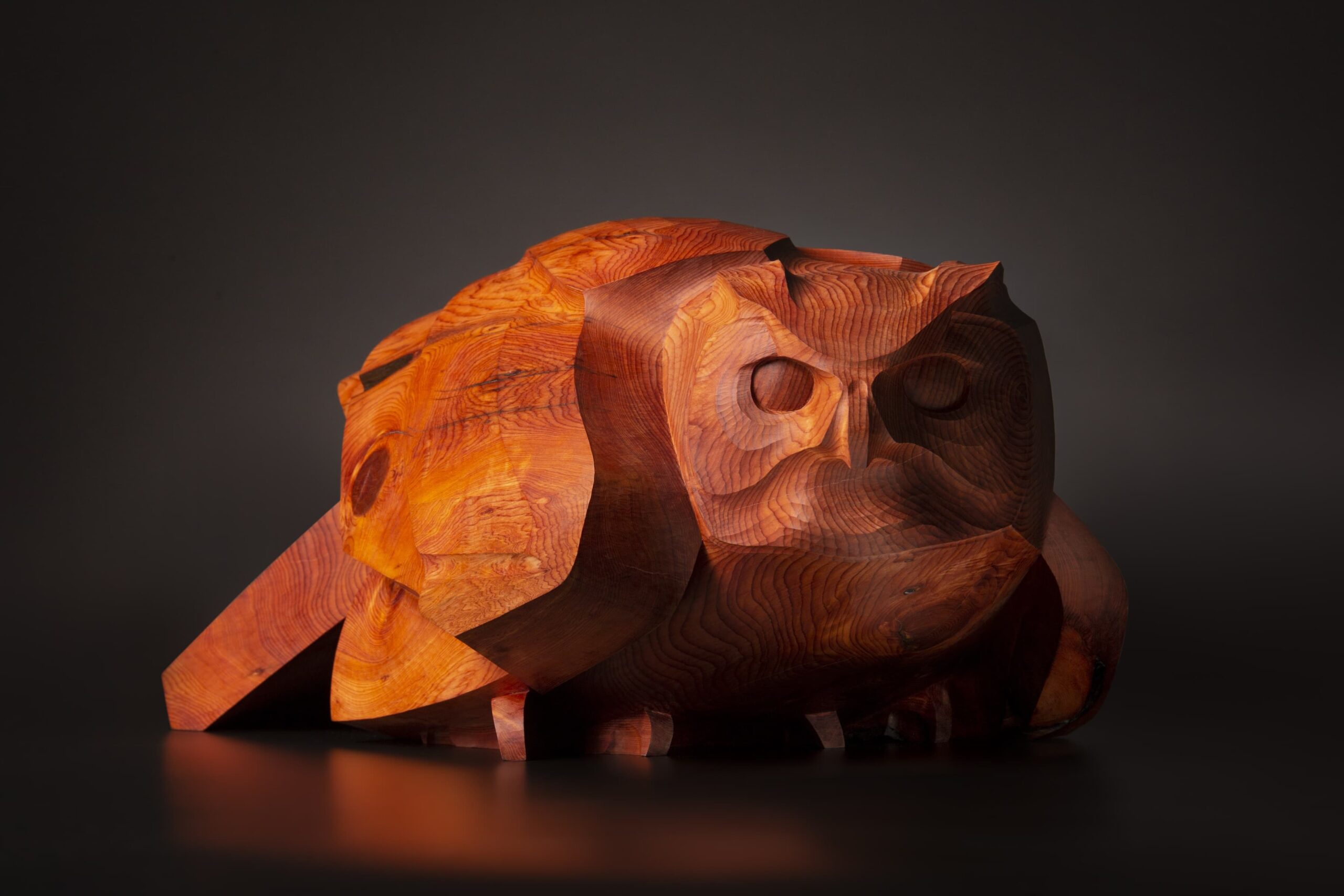
Peregrine O’Gormley, After the Broken Wing, juniper, 8 x 10 x 18.
Where do you live and work? Just outside of La Conner, WA. Our place overlooks Puget Sound. We are fortunate to live in the midst of the beautiful Skagit Valley, an environment filled with incredible light, islands, and the North Cascade range.
How would you describe your style? My work depicts living things in an anatomically respectful manner, while incorporating significant stylization and angularity. I’m not so much depicting the living thing but rather an idea that I’m aiming to convey visually with the aid of the subject matter.
What is your creative process like? Most of my work begins with a log and a chainsaw. I reduce the excess material as much as possible, then move into working with grinders. After that I use knives, chisels, and gouges to finish the piece. I don’t use sandpaper, as I enjoy the textures left behind by well-honed tools.
What have been some of the highlights of your art career? I was represented by a Santa Fe gallery when I was 14 years old. Beginning to work professionally as a sculptor in 2008 marked a significant milestone. After that, representation by Gerald Peters Gallery was a substantial step forward in my career. Other honors include being accepted to the Birds in Art show at the Leigh Yawkey Woodson Art Museum, a solo exhibition at the Bainbridge Island Museum of Art, being invited to the Woolaroc Retrospective, and being elected a fellow in the National Sculpture Society. I am looking forward to showing in the Prix de West Invitational next year.
When you’re not creating art, what else do you enjoy doing? I enjoy being with my family, gardening, kayaking, and walking in the woods, by the water, or in the hills.
Where can collectors find your work? Gerald Peters Gallery, Santa Fe, NM; Simpson Gallagher Gallery, Cody, WY; Smith & Vallee Gallery, Edison, WA; www.peregrineogormley.com.
POKEY PARK
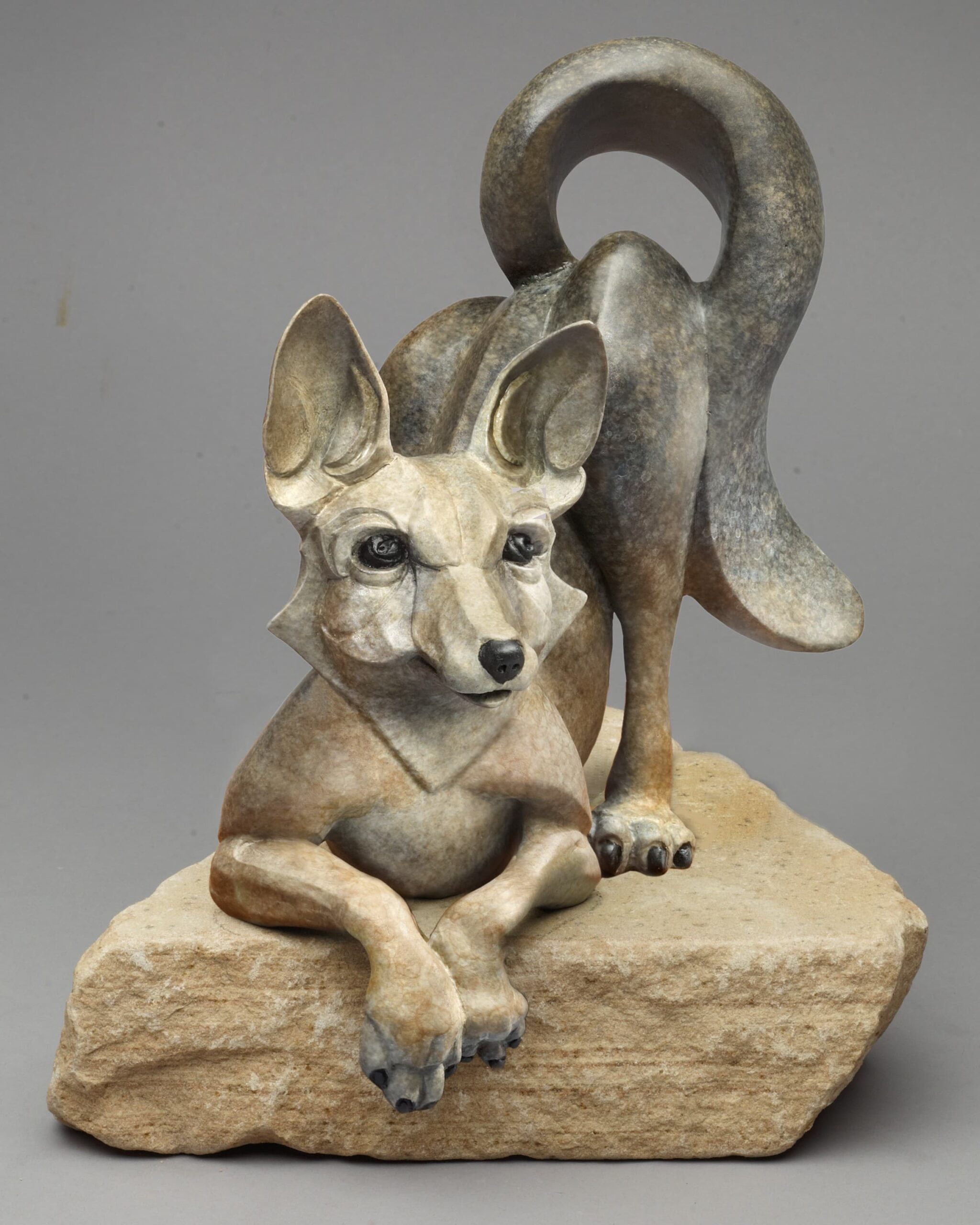
Pokey Park, Petit Renard, bronze, 9 x 7 x 7.
Where do you live and work? I was born in coastal Georgia and spent my young life exploring the marshes and forests there. I loved the textures, colors, and changing moods of nature, and I also loved watching wild animals in their natural habitats. I now split my time between Arizona and Massachusetts. I work wherever I am, having found that the perfect “studio” is, in fact, the desire to create.
What are your favorite subjects to depict? I like to sculpt endangered or threatened animals. Currently I’m working on a series of marine animals for a commission.
How would you describe your style? I’m fascinated by the myths and stories of disparate cultures, and I use them as starting points. I like to suggest human characteristics in the animals I sculpt in order to engage the viewer, and I create them with a sense of whimsy and an attitude.
Where did you study art? I have a degree in fine art from the University of Georgia. I’ve attended workshops at Pond Farm Pottery near San Francisco, CA, and the Taos Institute of Arts, but mainly I’ve learned by observing other artists at work.
What have been some of the highlights of your art career? By far the most exciting highlight was the opportunity to create sculptures for the Lucile Packard Children’s Hospital at Stanford University in Palo Alto, CA. It was synergistic, being able to bring happiness to very sick children through my art.
If you weren’t an artist, what would you be? If I weren’t a sculptor, I’d be a photographer. My creative process would be similar.
Where can collectors find your work? K. Newby Gallery & Sculpture Garden, Tubac, AZ; Fredericksburg Good Art Company, Fredericksburg, TX; Smith Klein Gallery, Boulder, CO; Lovetts Gallery, Tulsa, OK; www.pokeypark.com.
PAT ROBERTS
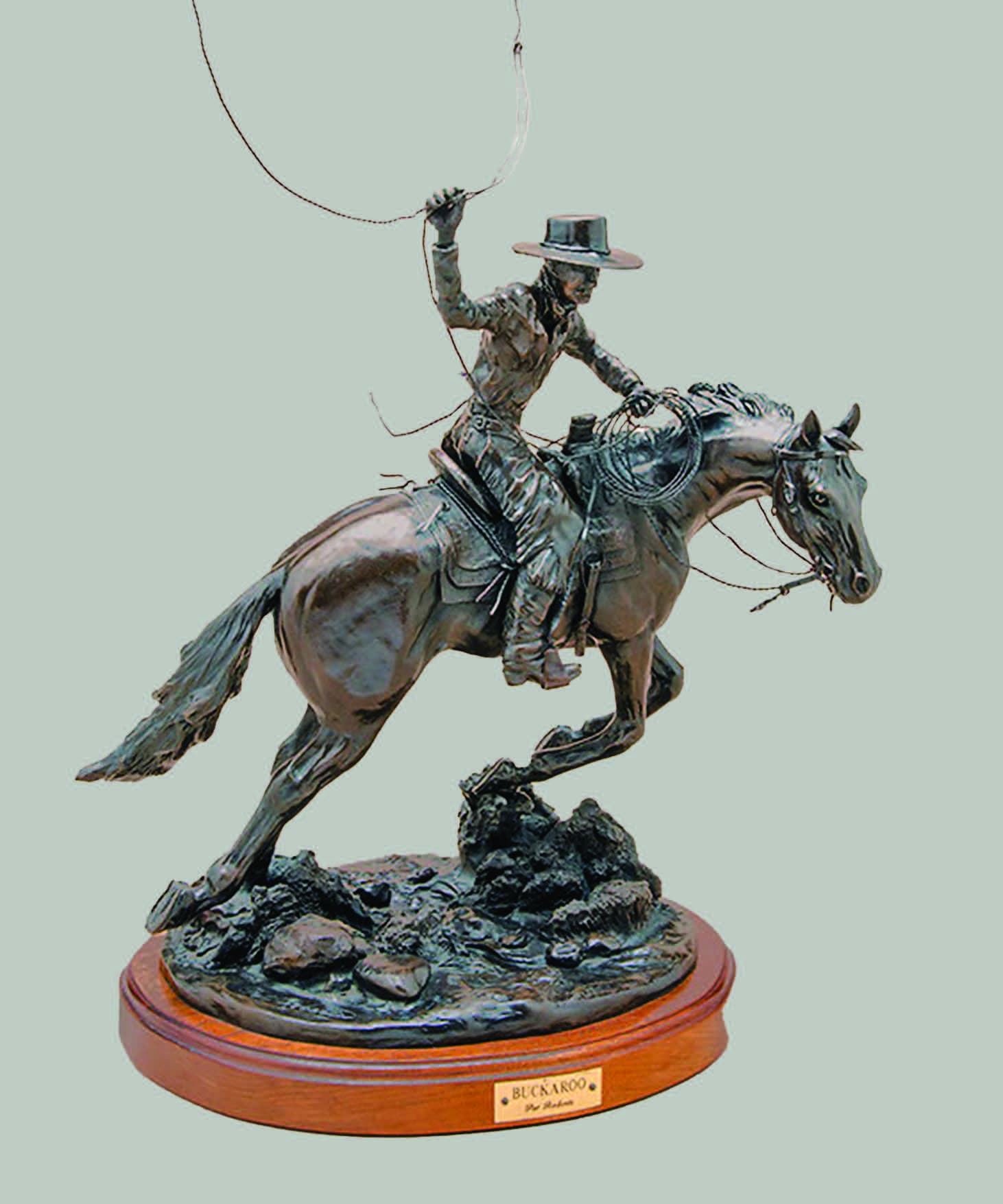
Pat Roberts, Buckaroo, bronze, 20 x 19 x 12.
Where do you live and work? My home is in the Santa Ynez Valley, near Santa Barbara, CA. I live on a beautiful horse ranch that is known all over the world for producing and training champion racehorses.
What are your favorite subjects to depict? Naturally, my favorite subjects are horses, especially the sleek Thoroughbreds here at our ranch, but I also observe other animals that inspire me to capture their movement, such as cheetahs, wolves, and cougars.
How would you describe your style? My style is sometimes whimsical but always accurate as to conformation and body composition. I want to capture that moment in time when, even though the sculpture depicts a horse or a person standing still, it must move in the eye of the viewer in order to be alive.
Where did you study art? I originally started painting to bring color into our new home. Since my husband is color-blind, he suggested that perhaps I should sculpt. So I took a six-week course in sculpture at Santa Barbara City College. Then an old friend, Jack Swanson, an original member of the Cowboy Artists of America, showed me how to make an armature and gave me my first case of plasteline [a type of modeling clay]. Later I took workshops with Swanson, Howard Terpning, Mehl Lawson, and other great artists.
What have been some of the highlights of your art career? My sculpture has been judged Best of Show and Best Sculpture in exhibits numerous times. Recently I was juried into the California Art Club’s Gold Medal exhibit. I have a sculpture in the permanent collection of the Kentucky Horse Park in Lexington, and several sculptures in the Royal Family Collection in England.
Where can collectors find your work? Sandz Gallery, Pismo Beach, CA; Ranch-N-Back, Santa Ynez, CA; Flag Is Up Farms, Solvang, CA; www.patrobertssculpture.com.
This story appeared in the August/September 2022 issue of Southwest Art magazine.